
What to expect from an exterior paint job in Rock Hill's climate
By Farah Whitfield · Updated 2026-06-22
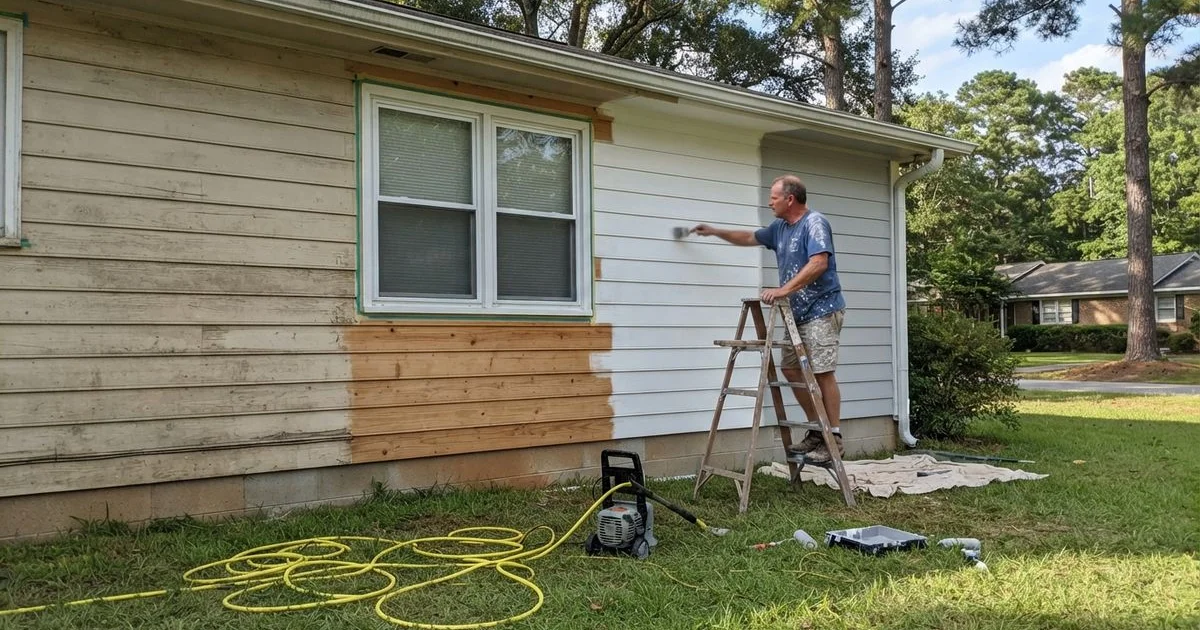
Exterior painting looks straightforward from the curb, but the actual job involves several stages that matter more than the color you pick. In Rock Hill’s climate, with humid summers, heavy pollen seasons, and the occasional ice storm, skipping any one of these stages tends to show up as peeling or fading within a year or two rather than the seven to ten years a properly prepped job should last.
Homeowners comparing exterior painters often focus on price and color samples, but the process itself is where a good job separates from a rushed one. Here is what that process actually looks like.
Washing and inspection
Every legitimate exterior job starts with a pressure wash, not a paintbrush. This strips dirt, mildew, and the chalky residue that failing paint leaves on a surface as it breaks down under sun exposure. A crew that skips straight to painting without washing is setting the new coat up to fail early, since paint does not bond well to a dirty or chalking surface.
During this stage, the crew should also walk the exterior and flag problem areas: rotten trim, cracked caulk, loose siding, or exposed metal that needs treatment before priming. This is the point where a written estimate can shift if the crew finds more repair work than expected, which is why an in-person walkthrough before the quote matters more for exterior jobs than almost any other kind of painting work.
Scraping, sanding, and repairs
Next comes removing any loose or failing paint by scraping and sanding, then addressing repairs: replacing rotten wood, re-securing loose siding, and filling gaps or holes. Skilled crews treat this stage as seriously as the painting itself, since paint applied over unstable surfaces or unrepaired wood will fail no matter how good the topcoat is.
Caulking and priming
Once repairs are done, gaps around trim, windows, and doors get caulked to keep moisture out. Bare wood, patched areas, and any exposed metal need a coat of primer suited to that surface before color goes on. This step is easy to rush and hard to inspect once the topcoat is applied, so it is worth asking your painter directly how they handle priming on repaired or bare sections.
Two finish coats
A proper exterior job gets two coats of a finish paint rated for outdoor exposure, not one thick coat. Two thinner coats generally hold up better against UV exposure and moisture than a single heavy one, and they even out any unevenness left from the primer or the substrate underneath.
Protecting landscaping and outdoor fixtures
A detail that gets overlooked in the excitement of picking a color: covering plants, outdoor furniture, light fixtures, and anything else near the work area before spraying or rolling starts. Overspray drifts more than most homeowners expect, especially on a breezy day, and a crew that skips this step can leave you with paint speckled across a flower bed or a mailbox that was not part of the job. Ask how they plan to protect landscaping, and confirm plants close to the house will be covered or temporarily moved rather than just hoped past.
Typical timeline, stage by stage
| Stage | What happens | Rough time for an average home |
|---|---|---|
| Wash and inspect | Pressure wash, flag repair needs | Half a day to a day |
| Scrape, sand, repair | Remove failing paint, fix rot or damage | One to two days |
| Caulk and prime | Seal gaps, prime bare or repaired spots | Half a day to a day |
| Finish coats | Two coats of exterior-rated paint | One to two days |
Weather can stretch this timeline. Rain delays are common in this region, and a crew that rushes through wet or humid conditions to hit a deadline is more likely to trap moisture under the new paint, which shows up later as bubbling or peeling.
What to ask before you hire
Ask specifically whether the quote includes pressure washing, how they handle wood rot or siding repair if they find it, what primer they use on bare or repaired sections, and what warranty covers peeling or blistering. A contractor confident in their prep work usually stands behind it for a few years, and that willingness tells you more about the quality of the job than the price alone.
For a broader look at how our scoring accounts for prep quality and follow-through, our methodology page breaks down exactly what we weigh. You can also start from the home page to compare exterior painters serving your part of the area.
FAQ
- How long does an average exterior paint job take?
- Most single-family homes take three to seven days from wash to final coat, depending on size, siding material, and how much repair work turns up during prep. Add time if the crew finds rotten trim or has to work around rain delays.
- Why does the crew pressure wash before painting?
- Washing strips mildew, pollen, and chalking paint residue that would otherwise keep new paint from bonding well. Skipping this step is one of the fastest ways to get an exterior job that peels within a year or two.
- What happens if the crew finds rotten wood partway through?
- A good crew stops and tells you before proceeding, since rotten trim needs to be repaired or replaced before painting over it does any good. Ask upfront how they handle this kind of surprise and whether it is a separate charge or built into the estimate.
- Do I need to be home during the job?
- Not for most of it, though it helps to be reachable if the crew has questions about color placement, gate access for pets, or unexpected repairs. Many homeowners plan to be around for the initial walkthrough and the final inspection.
Related on this site
- Browse exterior painting providers
- Mold, mildew, and rot: exterior paint warning signs to watch for
- HOA rules and exterior paint color approval in Fort Mill and Indian Land
- The best time of year to paint a house exterior in Rock Hill
- What to expect from an interior painting job, from prep to final walkthrough
- All guides →