
What to expect from an interior painting job, from prep to final walkthrough
By Farah Whitfield · Updated 2026-06-25
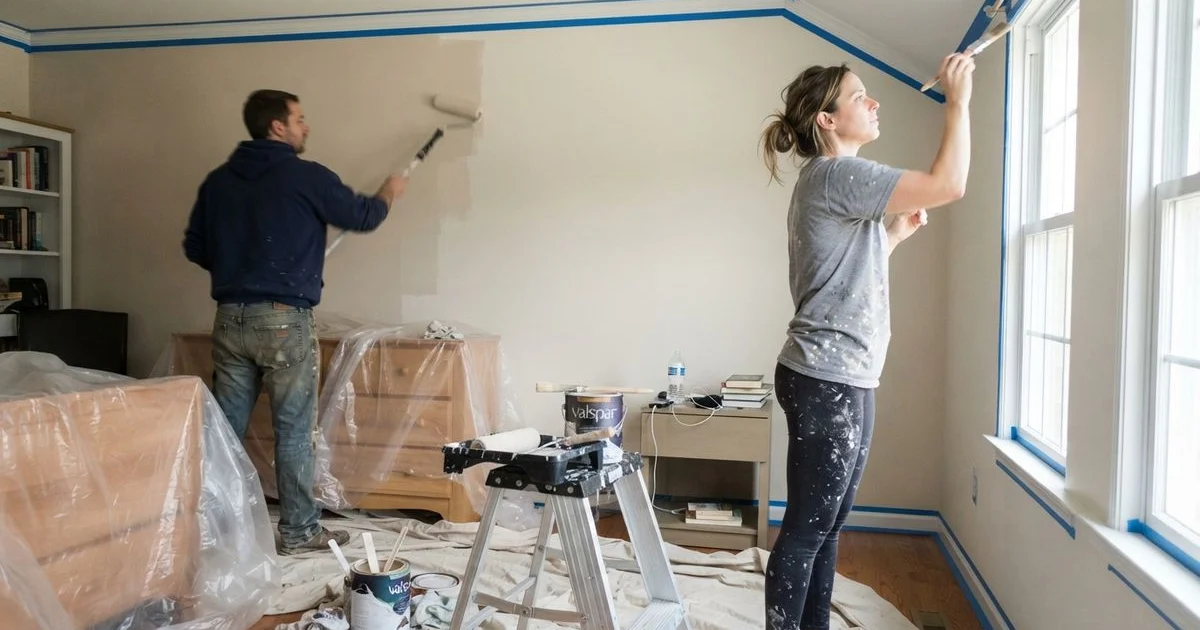
A good interior paint job is mostly prep work, not the actual painting. The parts that determine whether a repaint looks sharp in five years, not just on the day the crew leaves, happen before any color goes on the wall. Here is what a real job looks like, stage by stage, so you know what a crew should be doing at each point.
If you are comparing interior painters in the area, this is also a useful checklist for what to ask about before you hire, since not every crew handles each stage the same way.
Walkthrough and prep
The job starts with the crew walking the space to note wall condition, existing color, trim details, and anything that needs repair, like nail holes, cracks, or water stains. Furniture gets moved to the center of the room and covered, floors get protected with drop cloths, and outlets, switches, and trim get taped off. This stage is easy to rush, but skipping careful taping is exactly what leads to the ragged lines and paint bleed that show up in a finished job.
Patching and sanding
Nail holes, dents, and cracks get filled with spackle or joint compound, then sanded smooth once dry. This step matters more than most homeowners expect: an unpatched wall will show every flaw once it is painted a single flat color, since paint does not hide texture, it highlights it under the right light.
Priming where it is needed
Bare drywall, water stains, dark colors being covered with something lighter, and any patched areas usually need a coat of primer before the finish color goes on. Skipping primer over a dark existing color is one of the most common reasons a job needs an unplanned third coat, which slows the timeline and sometimes changes the price if it was not accounted for upfront.
Cutting in and rolling
Painters hand-brush a border along ceilings, trim, and corners (called cutting in) before rolling the main wall area, since rollers cannot reach cleanly into edges. This is detail work that takes real skill, and it is usually the difference between a crisp, professional-looking line and a wall that looks slightly off wherever it meets the ceiling or trim.
Two coats and dry time
Most interior jobs get two coats of finish paint, with drying time between them so the second coat covers evenly rather than dragging through a still-wet first coat. Rushing this stage to finish in a single day is a common shortcut that shows up later as thin spots or an uneven sheen.
Ceilings and trim, if they are part of the scope
Ceilings and trim usually get treated as their own line items rather than an afterthought to the walls. Ceilings typically get a flat white finish and are painted before the walls, since any overspray or drips are easier to clean up before the wall color is finished. Trim and doors usually come last, painted in a higher-sheen finish that holds up better to contact and cleaning than the flatter wall paint. Confirm upfront whether ceilings and trim are included in your quote, since some estimates price walls alone and treat these as an add-on.
What each stage should look like when it is done right
| Stage | Signs it was done well | Signs it was rushed |
|---|---|---|
| Prep and taping | Crisp tape lines, protected floors and furniture | Paint spatter on trim, floors, or furniture |
| Patching | Smooth, invisible repairs once painted | Visible dents or texture under the paint |
| Priming | Even color coverage in one or two coats | Old color or stains showing through |
| Cutting in | Straight, clean lines at ceiling and trim | Wavy lines, paint bleeding onto trim |
The final walkthrough
Before you consider the job done, walk the space with the crew in daylight. Look at walls from an angle to catch roller marks, check corners and edges for clean lines, and confirm no old color is showing through anywhere. A crew confident in their work will welcome this walkthrough rather than rush you through it.
For more on how we weigh workmanship and follow-through when scoring local painters, see our methodology. You can start comparing options from the home page whenever you are ready to request quotes.
FAQ
- How long does painting a single room usually take?
- A standard bedroom or living room with minimal prep typically takes one to two days, including drying time between coats. Rooms with heavy patching, dark colors that need extra coverage, or detailed trim work take longer.
- Do I need to move my own furniture?
- Most crews move furniture to the center of the room and cover it, rather than moving it out of the house entirely. Confirm this upfront, since some estimates only include covering furniture in place, not relocating heavy pieces.
- Why does the crew prime some walls but not others?
- Primer is needed over bare drywall, water stains, dark colors being covered with a lighter one, or repaired patches, since paint alone will not seal or hide these evenly. A wall in good condition with a similar existing color often does not need a separate primer coat.
- What should the final walkthrough cover?
- Check for even coverage with no roller marks in raking light, clean straight lines where walls meet trim and ceilings, and no bleed-through of the old color. Look closely at corners and edges, since those spots get rushed most often.