
Mold, mildew, and rot: exterior paint warning signs to watch for
By Farah Whitfield · Updated 2026-07-02
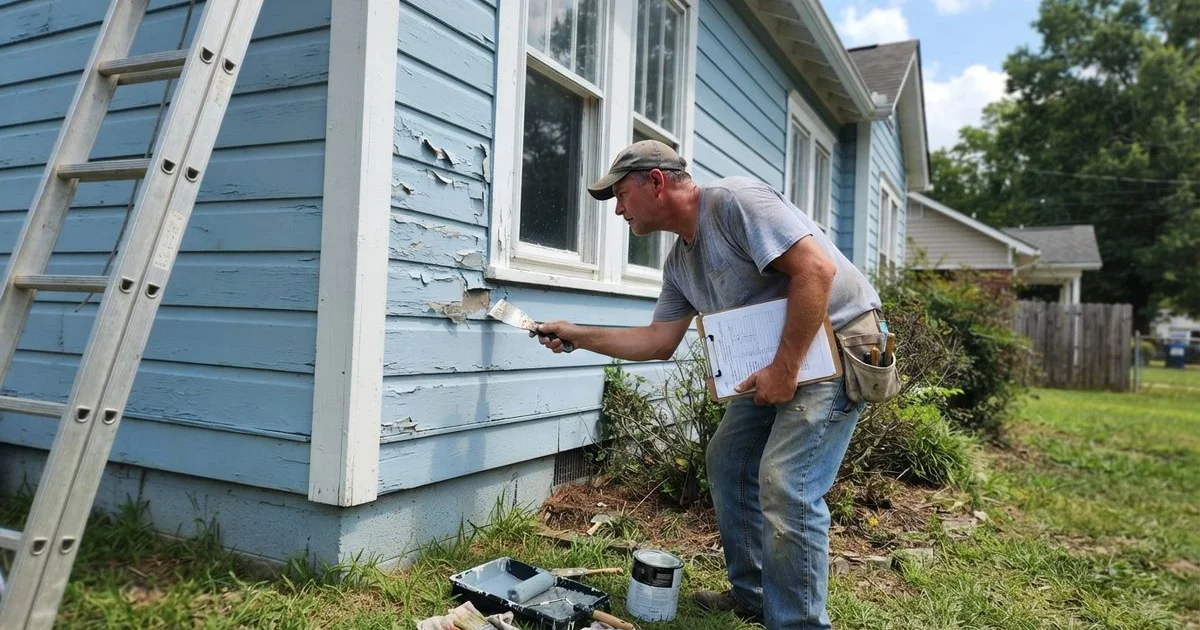
Exterior paint is a protective layer, not just a color choice. In Rock Hill’s humid summers and periodic heavy rain, that layer takes a real beating, and the visible signs that it is failing are worth learning to recognize before they turn into a bigger repair. This is general guidance to help you spot problems early, not a substitute for an in-person inspection if you suspect structural damage.
Chalking: the early warning sign
Run a hand across your siding or trim, especially on south- and west-facing walls that get the most direct sun. If it comes away dusty or powdery, the paint film has started breaking down under UV exposure and is losing its ability to shed water. Chalking on its own is not an emergency, but it is a signal that the clock is running on repainting before the problem gets worse.
Mildew that keeps coming back
Mildew shows up as dark, splotchy patches, usually in shaded or damp areas of a home’s exterior: under eaves, on north-facing walls, or near landscaping that holds moisture against the siding. A one-time cleaning that solves the problem is a maintenance issue. Mildew that returns within weeks of cleaning usually means moisture is getting trapped behind a failing paint film, not just growing on a dirty surface.
Peeling, bubbling, and cracking paint
These are the more obvious signs that a coating has failed. Peeling often starts at joints and edges where moisture gets in first. Bubbling can mean moisture trapped under the paint, sometimes from painting over a damp surface or skipping proper priming. Cracking, especially in a pattern that looks like alligator skin, usually means the paint is old and has lost its flexibility. Any of these is a sign the surface is no longer protecting the wood or siding underneath.
Wood rot: what comes after paint fails
Left unaddressed, failing paint eventually lets moisture reach the wood underneath. Soft spots, wood that gives when you press it with a screwdriver, or visible decay around window sills, trim, and the base of siding boards are signs of active rot. This is where a cosmetic issue becomes a structural one, and it is worth having a painter or contractor assess the extent before just painting over the surface.
Where these signs show up first
Certain spots on a home tend to show trouble before the rest of the exterior does, simply because they hold moisture longer or take more direct weather exposure. Window sills and the bottom edges of doors collect standing water after rain. North-facing walls and areas shaded by trees stay damp longer and are more prone to mildew. South- and west-facing walls take the most direct sun and tend to chalk first. Checking these specific areas during a seasonal walk around the house catches problems earlier than waiting until damage is visible from the street.
A quick reference for what each sign means
| Sign | What it usually means | How urgent |
|---|---|---|
| Chalking (powdery residue) | Paint film breaking down from UV exposure | Plan to repaint soon, not an emergency |
| Recurring mildew | Moisture trapped behind the coating | Address within the season |
| Peeling or bubbling | Coating has failed at that spot | Needs attention before it spreads |
| Soft or crumbling wood | Rot has set in underneath | Needs repair, not just paint |
When to call a painter versus a general contractor
Chalking, mildew, and peeling paint are squarely in a painter’s wheelhouse, and most exterior painting providers will include pressure washing and minor prep as part of a repaint. Soft or crumbling wood is a different situation. That usually needs carpentry repair before painting does any good, and a painter who spots it during a walkthrough should flag it rather than paint over the problem.
If you are dealing with health concerns tied to mold growth indoors or extensive water intrusion, that is worth a conversation with a qualified inspector or contractor rather than relying on this guide alone. For everyday exterior maintenance, catching these signs early usually means a straightforward repaint instead of a repair project.
You can read more about how our methodology weighs prep quality when scoring local painters, or start from the home page to compare providers who handle both painting and the repair work that sometimes comes before it.
FAQ
- Is mildew on my siding just a cosmetic problem?
- Surface mildew alone is often just cosmetic and can sometimes be cleaned off. But mildew that keeps returning quickly after cleaning usually means moisture is getting trapped behind the paint film, which is a sign the coating is no longer doing its job.
- What is the difference between mildew and wood rot?
- Mildew grows on the surface of paint or siding and can often be washed away. Wood rot is structural damage underneath, where wood has softened or decayed from prolonged moisture exposure. Mildew is a warning sign; rot is the damage that follows if the warning gets ignored.
- How can I tell if paint is chalking versus just dirty?
- Rub a clean, dry hand or a dark cloth across the surface. If it comes away covered in a powdery residue, that is chalking, a sign the paint film has broken down under sun exposure. Dirt usually wipes away without leaving that powdery coating behind.
- Should I paint over mold or mildew, or clean it first?
- Clean it first. Painting over active mold or mildew traps it under the new coat, and it will usually work its way back through the paint within months. A pressure wash with an appropriate cleaning solution before any painting starts is standard practice for a reason.
Related on this site
- Browse exterior painting providers
- What to expect from an exterior paint job in Rock Hill's climate
- HOA rules and exterior paint color approval in Fort Mill and Indian Land
- The best time of year to paint a house exterior in Rock Hill
- Low-VOC paint: what to know if you have kids, pets, or allergies at home
- All guides →