
The best time of year to paint a house exterior in Rock Hill
By Farah Whitfield · Updated 2026-07-13
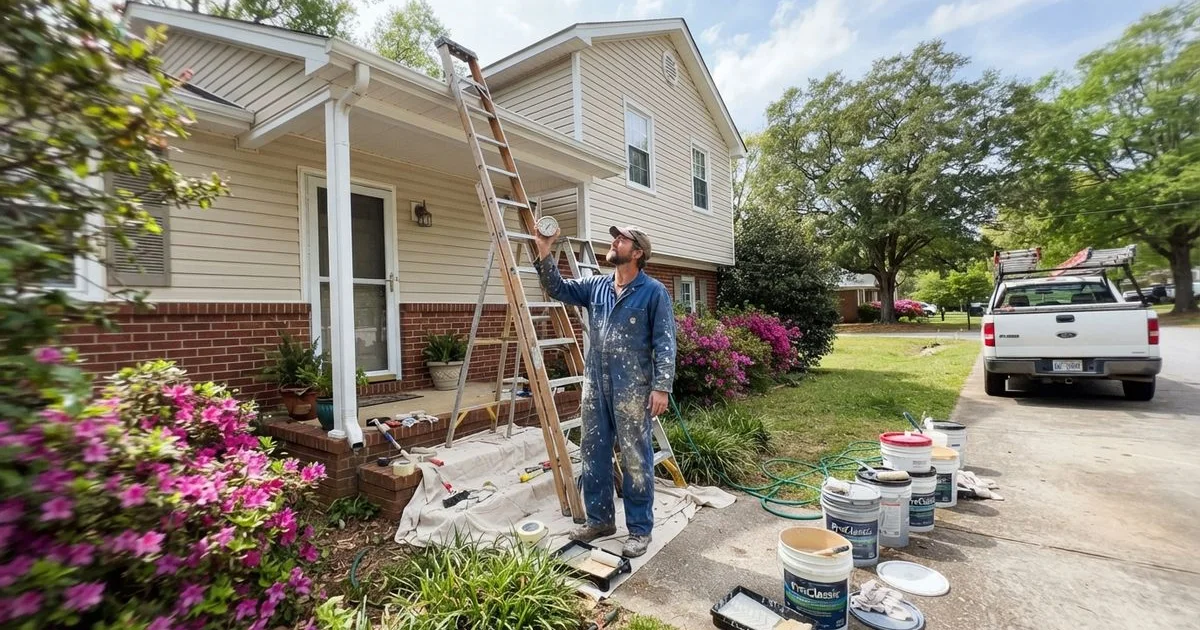
Exterior paint needs the right conditions to bond and cure properly, and Rock Hill’s mix of humid summers, heavy spring pollen, and occasional winter cold snaps all affect how well a coat of paint holds up. Timing the job around the calendar, not just your own schedule, makes a real difference in how long the work lasts.
Spring: good conditions, watch the pollen
Spring often brings mild, stable temperatures that are ideal for paint to cure properly. The trade-off is pollen season, which can coat a freshly painted surface before it fully cures if the timing lines up badly. A good crew plans around pollen forecasts and may wash a surface again close to the painting date if pollen has settled heavily in the days before.
Summer: workable, but timing within the day matters
Summer heat is not disqualifying, but direct afternoon sun on a wall can cause paint to dry too quickly on the surface, which prevents it from bonding well to the substrate underneath. This is why experienced crews often shift which side of the house they work on throughout the day, painting shaded walls in the afternoon heat and sunnier exposures earlier when temperatures are more moderate. Humidity in the summer months can also slow overall dry time, so coats may need more time between applications than the same job would take in a drier season.
Fall: often the most reliable window
Cooling temperatures, lower humidity than summer, and less pollen than spring often make fall a strong window for exterior work. Paint has more time to cure before overnight temperatures drop too low, and the more stable weather pattern generally means fewer rain delays than either spring or summer bring.
Winter: possible, but less predictable
Most exterior paints require a minimum application and curing temperature, often in the 50s Fahrenheit, and that threshold needs to hold overnight as well as during the day. A run of mild winter days can absolutely work for a smaller job, but scheduling around unpredictable cold snaps makes winter the least reliable season to plan a large exterior repaint around.
An occasional ice storm is part of the picture here too. Even a single hard freeze can crack a coat that has not fully cured, so a painter working in winter should be watching the extended forecast for more than just the days they plan to apply paint. If a cold snap is forecast within the first day or two after a coat goes on, a careful crew will push the schedule rather than risk the finish.
Booking ahead of the busiest season
Fall and spring tend to be the busiest booking windows for exterior crews precisely because the weather cooperates, which means the best-reviewed painters often have the longest lead times during those months. If you know your home needs a repaint, getting on a schedule a month or two ahead of your target season gives you more choice of crew than waiting until the ideal week arrives and calling around.
Booking during a slower season, like the peak of summer heat or a cold winter stretch, can sometimes get you a faster start date, but weigh that against the added risk of weather delays pushing the job out anyway.
A rough guide by season
| Season | Main advantage | Main challenge |
|---|---|---|
| Spring | Mild, stable temperatures | Heavy pollen can settle on fresh paint |
| Summer | Long dry days | Direct sun and humidity affect cure time |
| Fall | Often the most stable conditions overall | Shorter daylight window as the season progresses |
| Winter | Workable during mild stretches | Unpredictable cold snaps disrupt scheduling |
Planning around the forecast, not just the season
Regardless of season, a reliable exterior painting crew tracks the short-term forecast closely and plans coats around dry windows rather than pushing through rain or extreme heat to hit a deadline. Ask a painter how they handle weather delays and whether their estimate builds in flexibility for a stretch of bad weather, since a rigid schedule pushed through poor conditions is more likely to need touch-ups later.
Our methodology covers how we weigh scheduling reliability and follow-through when scoring local painters. You can start comparing exterior painting providers from the home page once you have a season in mind for your project.
FAQ
- Can exterior painting happen in the summer heat?
- Yes, but painters typically avoid painting a wall in direct, intense afternoon sun, since paint can dry too fast on the surface and fail to bond properly. Many crews work shaded sides of the house in the afternoon and sunny sides earlier in the day during summer months.
- Is winter ever a good time to paint outside?
- It depends on the week. Most exterior paints need a minimum temperature, often in the 50s Fahrenheit, to cure properly, and that temperature needs to hold overnight too, not just during application. A stretch of mild winter days can work, but scheduling is less predictable than in spring or fall.
- How does humidity affect exterior paint?
- High humidity slows drying time and can cause paint to stay tacky longer, which increases the risk of dust, pollen, or insects sticking to the surface before it cures. It can also trap moisture under the paint film if application happens too soon after rain.
- What happens if rain hits shortly after painting?
- Rain on paint that has not had enough time to cure can wash off pigment, cause streaking, or trap moisture that leads to bubbling later. A reliable painter tracks the forecast and plans coats around dry windows rather than pushing through if rain is imminent.
Related on this site
- Browse exterior painting providers
- What to expect from an exterior paint job in Rock Hill's climate
- Mold, mildew, and rot: exterior paint warning signs to watch for
- HOA rules and exterior paint color approval in Fort Mill and Indian Land
- How often you actually need to repaint your home's interior
- All guides →