
What painting costs in the Rock Hill area, and what changes the price
By Farah Whitfield · Updated 2026-06-18
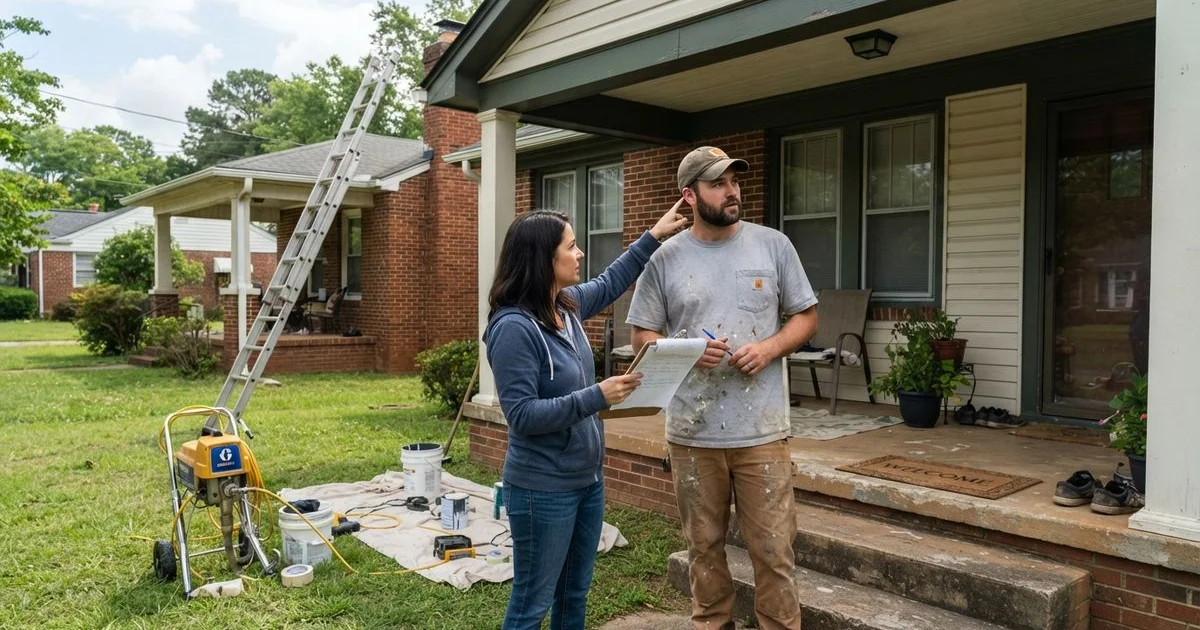
Painting prices in Rock Hill, Fort Mill, and the surrounding area vary more than most homeowners expect, and it is rarely because one painter is simply more expensive than another. The bigger swings usually come down to a handful of factors that change how much labor and material a job actually needs. Knowing what those factors are helps you read a quote and tell whether it reflects your project or just a generic per-square-foot number.
Prep work moves the price more than almost anything else
Painting is mostly prep. Scraping loose or peeling paint, sanding rough spots, filling nail holes and cracks, caulking gaps around trim and windows, and priming bare wood or stained drywall all happen before a single coat of finish paint goes on. A home in good condition needs relatively little of this. An older home with cracked caulk lines, wood rot on trim, or walls that were never primed after drywall repair needs a lot more, and that time shows up directly in the bid.
This is also why two quotes for the “same” job can look very different. If one painter walked the property and accounted for repairs, and another quoted from a photo or a phone call, the in-person quote is usually the more honest one, even if it is not the cheapest number on paper.
Surface, size, and structure
Square footage matters, but so does the shape of the space. A room full of built-ins, crown molding, and multiple trim colors takes longer to cut in and tape than an open room of the same size with plain walls and a single ceiling color. On exteriors, the number of stories, the type of siding (brick, vinyl, wood, or stucco all take prep differently), and how much trim needs a separate color all factor into labor time well beyond raw square footage.
Paint grade and number of coats
Standard, premium, and designer-grade paints all cost different amounts per gallon, and better paints often cover more evenly, which can mean fewer coats. That said, a dark existing wall color or bare drywall may need an extra coat regardless of paint grade, so do not assume a pricier paint automatically means a cheaper total job. Ask specifically how many coats are included and whether the estimate assumes your current wall color or a worst case.
Access and logistics also factor in
Beyond the surface itself, how easy a job is to physically access changes labor time. A two-story home with steep rooflines or limited space for ladders and scaffolding takes longer to prep and paint safely than a single-story home with clear access on all sides. Furniture-heavy rooms, tight stairwells, and homes where parking or material staging is limited also add time that a generic per-square-foot number will not capture. This is another reason an in-person walkthrough produces a more accurate quote than a phone estimate.
A rough sense of what drives cost, by project type
| Project type | What typically drives the price up |
|---|---|
| Interior painting | Number of rooms, trim and ceiling work, dark colors needing extra coats, drywall repair |
| Exterior painting | Number of stories, siding material, amount of scraping and caulking, wood rot repair |
| Cabinet refinishing | Number of doors and drawers, sprayed finish vs. brushed, glazed or two-tone finishes |
| Wallpaper removal | Number of layers, adhesive type, drywall damage found underneath |
If you want a starting number before you request quotes, the directory hosts interior, exterior, cabinet, and pressure washing cost estimators built around these same factors, so you can put in your own square footage and condition and see a realistic range.
Getting quotes that reflect your actual project
Once you have a sense of what drives the price, the next step is making sure the quotes you collect actually price your home rather than a generic average. Ask each painter what assumptions they are making about coats, prep, and paint grade, and get the answer in writing. Our methodology explains how we weigh pricing feedback alongside communication and follow-through when scoring local painters, since a fair price only matters if the work behind it holds up.
Comparing three quotes that all account for the same scope of prep and finish is the fastest way to spot a bid that is genuinely competitive versus one that is just low because it is missing something you will end up paying for later.
FAQ
- What is the single biggest factor in a painting quote?
- Prep work. Two jobs of identical size can differ a lot in price depending on how much scraping, sanding, patching, and priming the surface needs before any color goes on. A well-maintained wall or a freshly built home costs far less to paint than one with peeling paint, water stains, or old wallpaper glue underneath.
- Does paint quality really affect the total price that much?
- Yes, though usually less than prep does. Premium and designer-grade paints cost more per gallon and sometimes need fewer coats for full coverage, so the gap in total project cost is often smaller than the per-gallon price difference suggests.
- Is exterior painting always more expensive than interior?
- Per square foot, exterior work is often pricier because of pressure washing, scaffolding or ladder work on multi-story homes, and weather-related scheduling. But a large interior job with extensive trim, ceilings, and multiple rooms can easily cost more in total than a smaller exterior repaint.
- Can I get a rough number before calling around for quotes?
- Yes. Our cost estimator tools give you a starting range based on square footage and finish level for interior, exterior, cabinet, and pressure washing projects, so you know what a fair quote should look like before painters walk your property.