
How to get an accurate painting quote (and avoid a bait-and-switch price)
By Farah Whitfield · Updated 2026-06-15
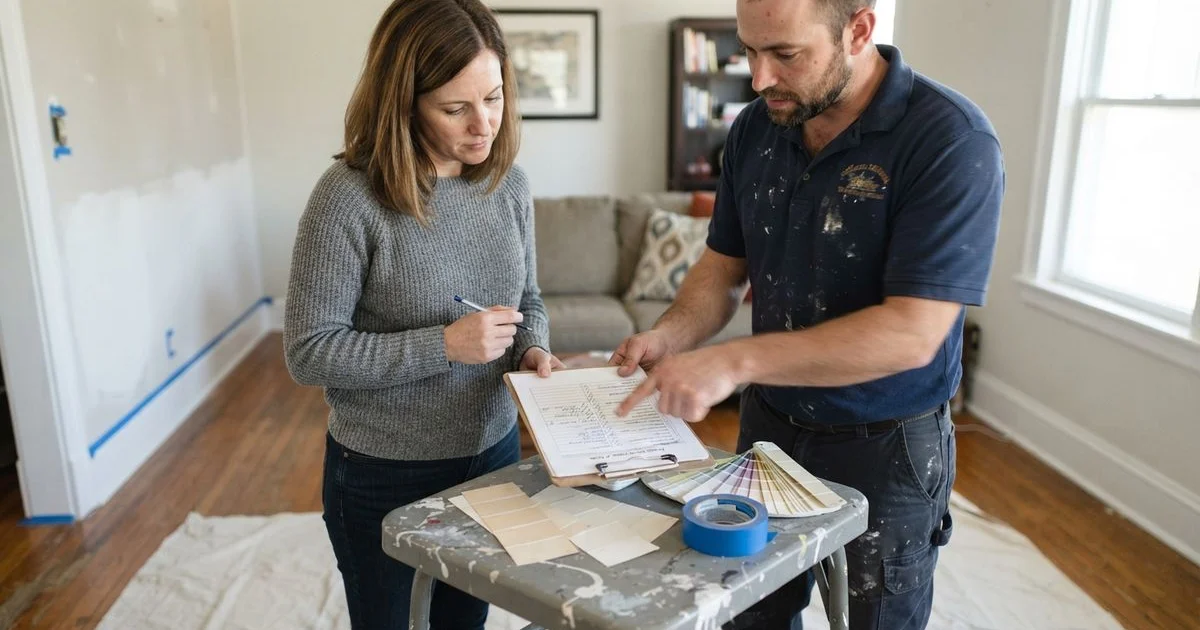
A painting quote is only useful if it holds up once the crew shows up. The most common complaint in this line of work is not a bad paint job so much as a scope that quietly grew, or a price that shifted after the first coat went on. Most of that friction is avoidable if you ask the right questions before you sign anything.
Why quotes drift once work starts
Painting looks like a simple job to price: square footage, a coat or two, done. In practice, the price depends heavily on things a painter cannot fully judge from a phone call or a quick walkthrough. Wall condition, how many coats it takes to cover a dark existing color, whether trim needs to be scraped and primed before it can be painted, and how much furniture or flooring needs protecting all change the real cost of the job.
A painter who skips these questions and hands you a number on the spot is often guessing low to win the job, then finding reasons to add charges once the crew is already inside your home and you are less likely to walk away. That is the pattern behind most of the pricing complaints that show up in painter reviews: a bid that looked fine at first, then grew once the crew found something they say they could not have known about in advance.
What a trustworthy quote looks like
Ask for the estimate in writing, not just a verbal number. A written scope should spell out the square footage or number of rooms, how many coats are planned, the paint brand and sheen, and what counts as prep work versus an extra charge. If a painter is reluctant to put this on paper, or gives you a range so wide it is meaningless, treat that as a signal to get another opinion.
It also helps to have the painter walk the space in person rather than quote from photos or a phone description, especially for exterior work where siding condition and trim repair can swing the price a lot. A painter who wants to see the job before pricing it is usually planning to price it accurately, not guess and adjust later.
Red flags worth asking about directly
Some patterns show up often enough in customer feedback that they are worth asking about before you hire, not after:
| Red flag | What to ask instead |
|---|---|
| Quote given with no walkthrough | “Can you look at the space before finalizing the price?” |
| Vague scope (“we’ll paint the walls”) | “Can I get this in writing with coats, prep, and paint brand listed?” |
| Price much lower than other bids | “What’s included at this price that might not be in the higher quotes?” |
| Reluctance to specify a payment schedule | “What’s due at start, midpoint, and completion?” |
| No mention of how they’ll protect floors or furniture | “Is site protection part of this quote or billed separately?” |
None of these questions are confrontational. A painter who plans to do the job right will have straightforward answers, because they have already thought through the scope.
Deposits and payment timing
Practices vary here. Some painters ask for a deposit before scheduling; others do not require anything until the job is complete. Neither approach is automatically wrong, but a large upfront payment paired with a vague scope is a worse combination than a smaller deposit tied to a clear, written plan. If a painter goes quiet after you pay a deposit and before work begins, that is the point at which most people wish they had asked more questions upfront.
A fair approach most homeowners land on: a modest deposit to hold the schedule, a payment at a defined milestone (like completion of prep or the first coat), and the balance due only once you have walked the finished job and confirmed it matches what was quoted.
Comparing quotes fairly
When you line up two or three quotes, make sure they cover the same scope before comparing the bottom line. One bid that includes two coats, full trim work, and cleanup is not comparable to one that only covers walls in a single coat, even if the second number looks better on paper. Ask each painter the same set of questions so you are judging apples to apples, not just picking the lowest total.
If you want a general sense of typical price ranges before you start requesting quotes, our directory covers what drives painting costs in more detail, and our methodology explains how we weigh pricing feedback, responsiveness, and follow-through when we score local painters. A little preparation before you call anyone saves a lot of frustration once the ladders are out.
FAQ
- Why did my painting quote change once the job started?
- Usually because the original bid did not account for prep the crew found once work began, like rotten trim, extra coats needed for full coverage, or drywall repair. A detailed written scope with prep steps listed reduces this risk, since it forces the painter to account for condition upfront rather than after they have already started.
- Is a much lower quote ever a good sign?
- Rarely on its own. A quote that comes in well below two or three others usually means less prep, thinner paint, fewer coats, or a plan to add charges once the job is underway. Ask what is included, line by line, before assuming a low number is a good deal.
- How many quotes should I get before hiring a painter?
- Two or three itemized quotes for the same scope of work is enough to spot outliers and compare fairly. More than that rarely changes the picture and just adds scheduling hassle.
- What should a painting estimate include in writing?
- Square footage or room count, number of coats, paint brand and sheen, what prep work is covered (patching, sanding, caulking, priming), who handles furniture or landscaping protection, and the payment schedule. If any of that is missing, ask for it before you agree to anything.