
What renters in Rock Hill can (and can't) paint without breaking the lease
By Farah Whitfield · Updated 2026-07-18
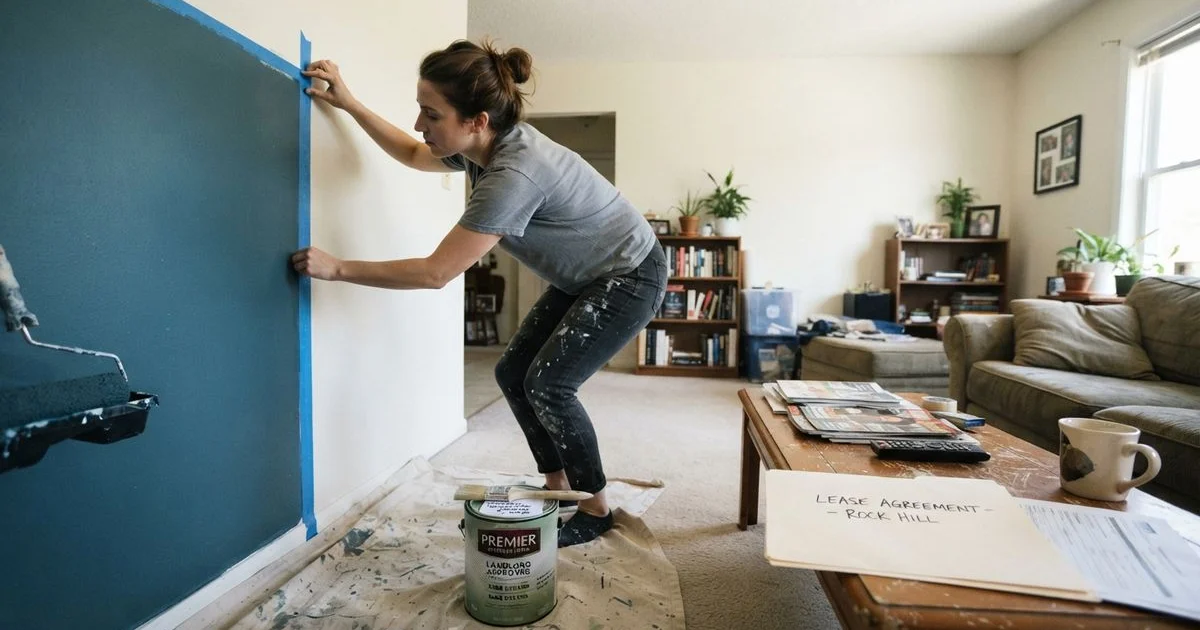
This is general guidance, not legal advice. Lease terms and landlord-tenant rules vary, so check your specific lease and, if a dispute comes up, consult a tenant resource or attorney familiar with South Carolina rental law.
Painting a rented space is one of the more common sources of security deposit disputes, and most of it comes down to a simple gap: renters assume a small change is fine, and landlords read the lease as requiring their approval for any wall alteration. Knowing where that line usually falls before you pick up a brush saves both money and hassle at move-out.
What most leases actually say
Most standard leases require tenants to return the unit in its original condition, normal wear and tear excepted. A paint job, even a well-done one, generally does not count as normal wear and tear, which means an unapproved color change can lead to a deduction from your deposit to cover repainting back to the original color. Some leases explicitly prohibit any paint changes; others simply require written approval first. Read your specific lease rather than assuming a common practice applies to your unit.
Asking for approval the right way
If you want to paint, ask in writing, even if the conversation starts as a phone call or text. Specify the room, the color (ideally with a paint code or sample), and whether you are asking the landlord to pay for any part of it. A written record protects both sides if there is ever a disagreement about what was actually agreed to.
Landlords are often more receptive to neutral, widely appealing colors, since those can function as a property upgrade rather than a personal preference that needs to be undone later. A bold or unusual color is a harder sell precisely because it may need to be repainted before the next tenant moves in.
Lower-risk alternatives to a full repaint
If a landlord is not open to paint, or you are not sure you want to commit, removable options can scratch the same itch with less risk. Peel-and-stick wallpaper, temporary wall decals, and removable accent panels are designed to come off without damaging the wall, though it is still worth checking your lease, since some prohibit any wall covering, not just paint.
Move-in documentation protects you either way
Before you do anything to the walls, whether painting or hanging removable decor, photograph every room’s current condition and keep a copy for yourself alongside the one in your move-in inspection paperwork. This gives you a clear record of the baseline the unit was in, which matters if a landlord later disputes what counts as pre-existing wear versus something you caused. It also gives you a reference for matching colors exactly if you end up needing to repaint back to the original before move-out.
If you are hiring someone to do the painting
Some renters prefer to hire a painter rather than do the work themselves, especially for a full room or if the ceiling and trim are involved. If your landlord has approved the change, share the approval and the exact paint code with whoever does the work, so there is no ambiguity if a dispute comes up later about whether the color matches what was agreed to. Keep the receipt and any color documentation with your lease paperwork in case it is needed at move-out.
What to check before you paint
| Situation | What to do |
|---|---|
| Lease explicitly allows painting with approval | Submit your color choice in writing and wait for confirmation |
| Lease is silent on painting | Ask your landlord directly and get the answer in writing |
| Lease explicitly prohibits painting | Consider a removable alternative instead |
| You already painted without asking | Talk to your landlord before move-out, not after, about repainting back |
If you already painted without asking
If you painted before checking, the best move is usually to address it before move-out rather than hoping it goes unnoticed. Offer to repaint back to the original color, or ask if the landlord is open to keeping your color if it is neutral and well done. Landlords are often more flexible when a tenant raises the issue proactively instead of waiting for a move-out inspection to surface it.
Our methodology explains how we weigh customer feedback and workmanship when scoring local painters, useful if you do get the green light and want a clean, professional result. You can start comparing options from the home page whenever you have approval in hand.
FAQ
- Can my landlord charge me for painting a wall without permission?
- Often yes. Most leases require the property to be returned in its original condition, and an unapproved paint job is a common reason security deposit deductions happen. Get any color change approved in writing before you start.
- What if my lease does not mention painting at all?
- Silence in a lease does not automatically mean permission. Ask your landlord directly and get their answer in writing, since defaulting to 'it wasn't prohibited' rarely holds up if a dispute comes up at move-out.
- Is removable wallpaper or peel-and-stick a safer option than paint?
- It can be, since most peel-and-stick products are designed to come off without damaging the wall underneath, but check with your landlord first anyway. Some leases restrict any wall covering, not just paint, and cheap or old adhesive can still pull off paint or leave residue.
- Can I ask my landlord to split the cost of a paint job I want?
- Some landlords will cover materials or a portion of the cost if the color you want is neutral and likely to appeal to future tenants too, since it can double as general property upkeep. It never hurts to ask, especially if the current paint is old or worn.